Press "Enter" to skip to content

Senior presents research on inequitable sentencing of sex offenders at URCAD

For the 23rd year in a row, the University of Maryland, Baltimore County held the Undergraduate Research and Creative Achievement Day. URCAD allows hundreds of students to showcase their work in topics that they are passionate about or that they find interesting and wish to further explore. Samiksha Manjani, a senior political science and psychology major, presented her research on the disproportionate incarceration of sex offenders. 

In order to create her project, “The Injustice of Inequitable Sentencing of Sex Offenders,” Manjani collaborated with political science professor Dr. Jeffrey Davis, and the two worked together to create an analysis of incarceration rates and how disciplinary action is taken towards sex offenders. More specifically, their research compared the inconsistent sentencing given to sex offenders of different races who were convicted of the same crime.

According to “The Sentencing Project,” a non-profit organization advocating for criminal justice reform, approximately two-thirds of the 750,000 total Americans who are registered sex offenders, are white men. Despite this, the rate for black men who are registered is twice that of whites. This disparity could be due to a number of reasons, such as racial bias and preconceptions.                                         

Manjani’s project was inspired by the 2016 case, “People v. Brock Turner,” where Turner raped an unconscious woman at Stanford University. Turner was indicted and found guilty for three felony sexual assault charges, which hold a statutory minimum sentence of two to three years incarceration. Nevertheless, Judge Aaron Persky sentenced Turner to just six months of confinement in jail, and Turner was released after serving three months.

“Seeing that case was disheartening for a lot of survivors. How can somebody serve two percent of what they could have gotten, you know?” Manjani explains. “I wanted to see how often this is happening, who is getting this privilege and who is going away for 15 years … it just expanded to where over time I just got really deep into the material.”

Manjani’s research compares Turner’s modest sentencing to that of Cory Batey, a black football player at Vanderbilt University who was also convicted of raping an unconscious woman. The difference in these cases is that Batey was sentenced to 15 years in prison, the minimum sentence for statutory rape in his state of Tennessee, as opposed to Turner’s six months. This observation raised the question of why these two men who were found guilty of the same crime were given such different sentences.

For the project, Manjani created a Restorative Justice Model, which is a model of an alternative disciplinary approach for sex offenders. The way that sex offenders are currently disciplined, according to Manjani, makes it difficult for them to reintegrate into society. Since they are placed on a sex offender list indefinitely, it is difficult for them to obtain employment and create personal relationships; this, in turn, influences them to commit crimes, and they go back into the system. However, with a Restorative Justice Model, the crime is seen as a wrong against the individual, rather than the state. The model requires the offender to acknowledge the harm and hurt that they have caused to the individual and identify the action necessary to restore and prevent the issue from recurring. This has proven successful in the past, such as with a 2007 model called “Project RESTORE,” which had an 80 percent completion rate. 

URCAD continues to encourage creativity and critical thinking outside of the classroom. Like Manjani, UMBC students are given a platform to expose ideas and research that is passionate to them to a broader audience. “Whenever you work on a project really hard obviously you’re proud of it [and] you want to show it to people,” said Manjani. “I’m still shocked today to see how many people are interested in this. It’s been a really great process for me.” 
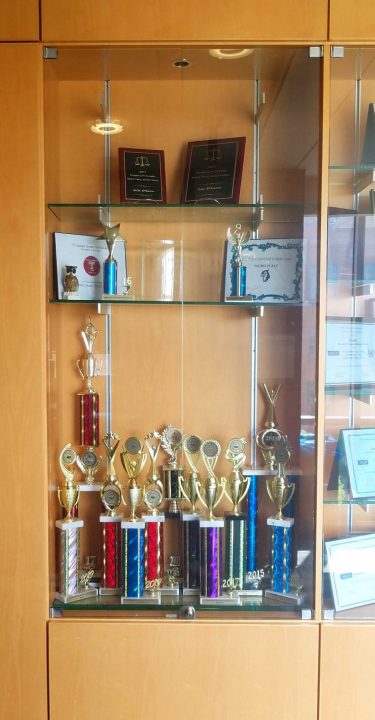
UMBC Mock Trial takes 8th place in the National Championship Tournament

This past season has been the most successful for the Mock Trial team at the University of Maryland, Baltimore County since the team was founded in 2011. The team’s season ended at the American Mock Trial Association’s National Championship Tournament, where the Retrievers came in eighth place in their division and had the 13th best record overall.

The NCT was the last of a series of competitions hosted by AMTA, where mock trial teams from across the nation participate in the hopes of eventually getting to the NCT in April. The first portion of the series are regional competitions, of which there were 28; top teams from each of these regionals advance to the Opening Round Championship Series in March, and the top five to six teams from each ORCS earn a bid to the NCT. This competition series cuts the mock trial field from over 750 teams that compete at regionals to the top 48 teams in the country at the NCT. 

This season required a collaborative effort from UMBC Mock Trial, as the team faced several challenges throughout the year. “Everyone has pushed through their own individual struggles at different times throughout the year, and they have committed themselves to helping the team succeed,” said sophomore chemistry major Thomas Kiley. “We had 19 days to prepare an entirely new case … everyone did what they had to in order to make UMBC Mock Trial have an impact at this tournament. Everyone has grown this year into a stronger competitor, and next year we are going to be even better.”

Head coach Ben Garmoe, a 2013 political science graduate, is one of the founders of the UMBC Mock Trial team. Garmoe is an adjunct professor at UMBC as well as a full-time litigation attorney, and he dedicates much of his time to mock trial, which is evident through the team’s numerous achievements and continued growth. Garmoe’s role as a coach includes him being a mentor to the students on the team, as he “is there for us when we are having personal issues, and … whenever we need help with mock trial,” said Nihir Nanavaty, a senior political science major. “I quite literally got my scholarship to law school because of UMBC Mock Trial and the things Ben has done for me when it comes to speaking with law school admissions officers and writing recommendation letters.”

Their recent eighth place finish at the NCT is not the first of UMBC Mock Trial’s achievements this season. The team placed first at Duke’s Tobacco Road Invitational in the fall as well as at Georgetown’s Hilltop Invitational in January, outranking teams from Brown University, Fordham University, Columbia University and Howard University. According to Sydney Gaskins, a member of Mock Trial’s A-Team, the first place win at the Hilltop Invitational is the first time UMBC Mock Trial has ever maintained an undefeated record at a tournament.

Gaskins, a sophomore political science major who has just completed her second year participating in UMBC Mock Trial, has had a particularly triumphant season. She has won several awards at the AMTA tournaments, including attorney awards at the regional and ORCS tournaments. Most recently she was awarded an All-American Award for her role as an attorney at the NCT, which is the highest honor in the country. “I couldn’t have done any of this alone. I needed my teammates, my coaches and my loved ones every step of the way,” Gaskins stated. “They gave me the resources that I needed to succeed. Whether it was words of encouragement or a simple hug when I was at my lowest, they were my backbone through it all.”

Gaskins has also been invited to compete in Trial By Combat, a one-on-one mock trial championship that aims to challenge some of the best individual competitors in the country. Only 16 students are chosen nationwide out of the 750 total teams. “[It] is … surreal. I’m very excited to be UMBC’s first TBC competitor and show everyone what we’re made of,” said Gaskins.  

UMBC Mock Trial looks forward to what is to come in next year’s season. Through the losses and the wins, the team continues to put their best foot forward and strive farther. “At the end of the day, hard work pays off, and UMBC Mock Trial is a perfect example of what can be done when a group of driven young people set their minds to do something amazing,” Nanavaty said.


UMBC responds to the New Zealand tragedy

Recent mass shootings in Christchurch, New Zealand has caused significant concern across the nation. On March 15, a man shot fire inside Al Noor Mosque at 1:30 p.m. The atrocity was live streamed on social media by the shooter for approximately 17 minutes, which quickly spread among the internet. A second shooting took place shortly after the live stream ended at Linwood Mosque where at least seven people were killed, leading to a total of 50 people killed and 50 others wounded.

President Freeman Hrabowski addressed the event in an email sent to the UMBC community. “Our hearts are with the victims, their families, the first responders who rushed to their aid, the people of Christchurch and New Zealand, and all those who have been affected by this senseless act … We in America are sadly all too familiar with escalating violence and hate targeting community spaces including mosques, synagogues, churches, schools and campuses,” Hrabowski writes. UMBC prides itself on its diversity and inclusion, both in and outside of the classroom, having many student organizations that recognize various religions, ethnic identities and sexual orientations. Moreover, 48% of freshmen student enrollment at UMBC are people of color.

Currently, the state of Maryland operates on a “May Issue” policy to determine who may obtain a gun permit. One must provide reasonable cause to the state, where the state determines whether they qualify for the permit or not. Permit holders are required to be fingerprinted and to pass a training class. Additionally, people deemed mentally ill, or who have been in a mental health facility, are exempt from obtaining a gun permit.

Maryland state law gives the University System of Maryland the leeway of enforcing their own gun policies on campus. All schools within the USM have banned concealed carry firearms. The system also requires that each campus have an emergency preparedness plan in the event of a shooting. The plan is developed by a campus committee who meets regularly to update the plan and address new types of threats. One of the more infamous shooting incidents in the USM was a murder-suicide that occurred back in 2013 by a University of Maryland, College Park graduate student.

As shootings become more prevalent in western culture, it raises questions of where to go from here. “We must answer all hate crimes with a renewed commitment to advancing social justice, deepening our resolve to understand diverse experiences and honoring the benefits such differences bring to our community and to humanity,” President Hrabowski said. Students with additional concerns or needs for reconciliation should contact The Interfaith Center at 410-455-3657; the Counseling Center can be reached at 410-455-2472.

Photo from The Retriever archives.

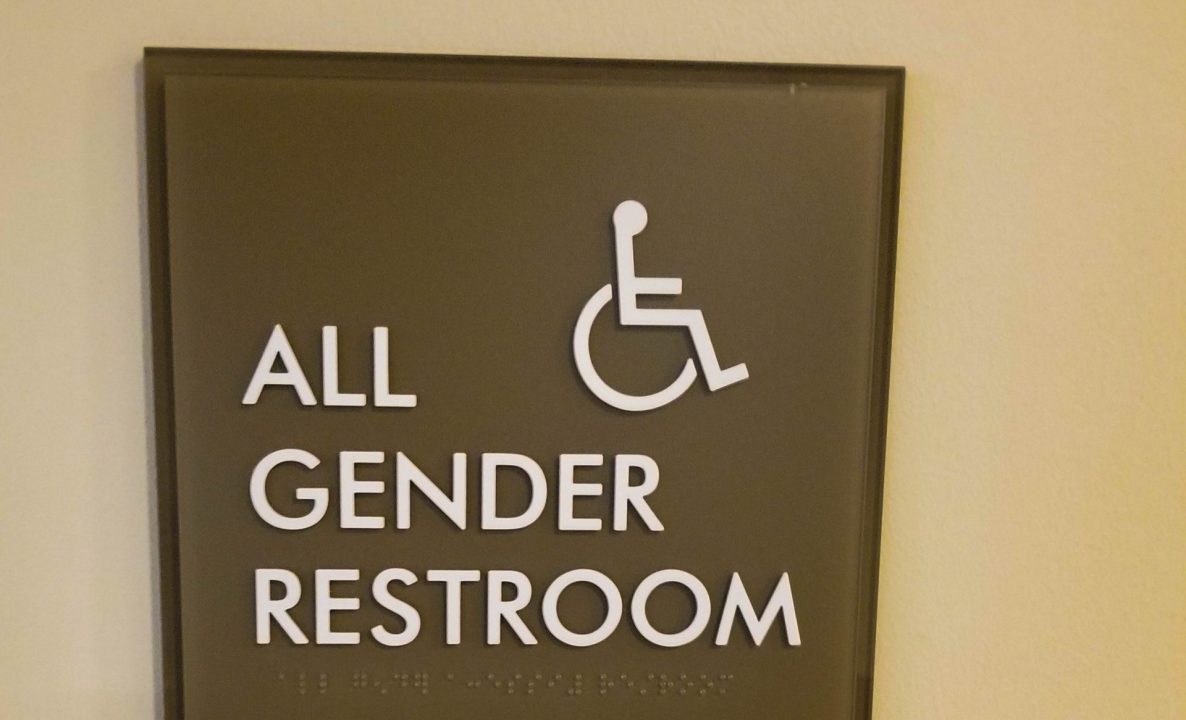
UMBC plans to fully implement all gender restrooms on campus

President Freeman Hrabowski, the University Steering Committee and the All-Gender Restroom Steering Committee will be collaborating to implement all-gender restrooms throughout the UMBC campus over the next few semesters. Beginning this semester, the president and the committees will work to create plans and guidelines to establish this concept, some of which include converting or renovating existing facilities and constructing new ones.

In an email to the UMBC community, President Hrabowski states that all members of the UMBC community should have access to safe restroom facilities that are more easily accessible. “Now is the time when we must put our values into action by moving forward on our commitment to making all-gender restroom facilities more widely available,” he writes.

The All-Gender Restroom Steering Committee is comprised of faculty, staff and students, some of which are members of the LGBTQ community. The ultimate goals of the All-Gender Restroom Steering committee are to focus on the dilemma of accessible restrooms inclusive to everyone and to work progressively to implement this ideal on UMBC’s campus.

According to Keith Bowman, dean of the College of Engineering and Information Technology, there are several reasons why some may prefer an all-gender restroom. “The traditional design of our buildings and restrooms create compromises for transgender people or people who do not identify in a binary way. But [traditional restrooms also affect] people who do not fit traditional norms of masculinity or femininity or people who have medical conditions,” he says. He also says that parents who are escorting their children of a different gender or children with a disability are impacted by traditional restrooms.

In 2018, UMBC renovated all single-use restrooms on campus into all-gender restrooms. There are 41 single-use all-gender restrooms inside academic and student life buildings and 16 single-use all-gender restrooms in residence halls. UMBC Facilities Management is working to add more single all-gender restrooms in the University Center and Retriever Learning Center in the Albin O. Kuhn library.

UMBC is one of several universities in Maryland to have gender inclusive restrooms and housing. Both Johns Hopkins University and Towson University have over two dozen gender-neutral restrooms on campus. “Our next step will be to expand the availability of all-gender restrooms by identifying opportunities to designate existing multi-user restrooms as all-gender restrooms in campus buildings that currently lack single-user all-gender restrooms,” states Hrabowski.

Any additional questions or concerns can be submitted on a document that is linked in the initial email addressed to the community. Additionally, anyone that is interested in being a part of the planning and implementation of this initiative can contact the All-Gender Restroom Steering Committee at @agrumbc.edu.

UMBC establishes an internship program for students seeking STEM careers

UMBC has been working to expand a new program that will benefit both STEM students and companies within the tech industry. The “Maryland Technology Internship Program” helps give students career-oriented opportunities while also seeking out talented individuals as interns for smaller tech companies. This way, talent is being retained within Maryland.

The program, which is funded by the state and administered by UMBC, provides funding for smaller companies in efforts to increase the amount of paid internships in Maryland. Current students and recent graduates are eligible to qualify for the program. All companies must be technology-based and located in Maryland. Employers can be compensated for up to half of an intern’s pay, with a maximum amount of $3,000 for each year per intern.

Sheldon Broel is the founder and CEO of “Athena,” a biotech company, and is also the assistant graduate program director of UMBC’s master’s in biotechnology program. Broel used the MITP to hire intern Gavin Burton, a chemistry major at Stevenson University. Broel describes hiring new talent as “an iterative process of training that can be expensive and time-consuming.The program helps students expand their knowledge and strengthen their resumes while reducing the expense to the companies who are doing that training,” says Broel.

UMBC alumna Bethany Meyer is the chief technology officer and co-founder of “CourseArc,” an online software that allows companies to create their own online courses. Meyer was able to find Jessica Hutchinson, a Towson University student, through the MITP. “It’s been great having someone on our team who is eager to take on a wide range of tasks,” states Meyer. She says that Hutchinson works on projects ranging from market research to quality assurance. She also says Hutchinson regularly shares insights and fresh ideas with her team.

MITP gave Gavin Burton the opportunity to explore his career choice and gain valuable knowledge about specialty pharmaceuticals. “It reassured me that I’m on the right path with what I want to do with my life,” he says. UMBC students can also be a part of MITP and are featured monthly as “MITP’s Intern of the Month.”

Government shutdown affects Office of Sponsored Programs

The recent Federal Government partial shutdown has caught nationwide attention as it affected the lives of many, including the UMBC community. The shutdown began on Dec. 22 and lasted until Jan. 25, making it the longest government shutdown in history. The shutdown was due to a disagreement between President Trump and Congress on funding for border security. In just 35 days, the economy took an $11 billion hit, including $3 billion that cannot be replenished.

The UMBC Office of Sponsored Programs negotiates financial sponsorships with federal organizations, submits proposals and manages awards. OSP works with unit administrators to assist staff in proposal preparation and creating sponsorship guidelines. They also conduct sponsored project training, education and communication. The OSP collaborates with the Office of Contract and Grant Accounting in managing extramural awards and campus initiatives for sponsored projects.

As a result of the partial shutdown, the OSP and OCGA’s functionality was restricted. “The recent partial Federal Shutdown had significant impacts on federally funded research at UMBC. Proposal submittal deadlines were delayed and award actions could not be processed,” says Stanley Jackson, Director of OSP. “For some affected agencies, UMBC was not able to collect reimbursement for expenses during the shutdown.”

Like many other businesses, the OSP was forced to make accommodations and plan ahead just in case the shutdown was prolonged. “We were within days of having to start shutting down some projects including one multi-million dollar project. This would not only have required UMBC to start laying off some researchers but could have also impacted the visas for some individuals employed on several research projects,” Jackson states. Additionally, some UMBC employees who work at the NASA Goddard Space Flight Center were forced to work from home or find other accommodations while the center was closed.

Many UMBC students were also affected by the government shutdown, including Tara Kitchelt, a Music Vocal Performance major. “My dad works for OPM [the United States Office of Personnel Management] … when I came home for winter break he wasn’t working, and when I went back to school he still wasn’t working,” says Kitchelt. “We missed out on two paychecks, and I had to take money out of my savings … my mom had to continue working full time in order to pay for everything.”

President Freeman Hrabowski addressed the UMBC community in an email sent out on Jan. 28, acknowledging the drastic impact the shutdown has had. “Many … are still feeling the effects of the partial federal government shutdown that ended this past weekend … as we continue to hope for a prompt resolution that will avert another shutdown and fund the federal government through the end of the fiscal year, we ask everyone in our community to consider those affected by the shutdown and what they might do to help.”

Professor’s new book highlights immigration policy and gender

Dr. Amy Bhatt, associate professor of gender and women’s studies, recently authored the book “High Tech Housewives: Indian IT Workers, Gendered Labor, and Transmigration.” The book discusses the social, economic and political struggles that Indian migrants in the information technology field experience when transitioning to the United States. Additionally, “High Tech Housewives” analyzes the impacts of these barriers placed on IT migrants pertaining to women.

Immigration is a sensitive topic that has been brought to light in recent years within the U.S. “People tend to think about H-1B visa issues as problems that only affect men, failing to consider the often highly skilled spouses who come with them to the U.S.,” says Bhatt. According to the U.S. H-4 Visa program, female spouses of Indian IT workers can travel with them but are not given the rights to work.

Although these women may have the education and skill to work white collar jobs such as IT, they are not given the opportunity to do so due to immigration policies. Thus, the term “High-Tech Housewives” emerged. Bhatt delves deeper into how this aspect affects women’s self-identity and encounters within society.

In addition to her role as a professor of gender and women’s studies, Bhatt also serves as affiliate associate professor in the language, literacy and culture program and the Asian studies program. Through these roles, she has done extensive research on immigration policy, migration as it affects women and families and social reproduction.

Bhatt places much emphasis on immigration activism and South Asian community reform. “U.S. consumers depend on the global flow of goods and services in the tech, healthcare and higher education sectors,” she explains. “In a global high-tech economy, it is important to acknowledge the value that immigrants bring to our lives and how they are being threatened by immigration policy.” On Wednesday, Dec. 5, UMBC hosted a forum on Bhatt’s book in the Albin O. Kuhn Library Gallery. The forum directly addressed topics that were discussed in “High-Tech Housewives” and included a book signing.

Bhatt has also published articles for several other news outlets worldwide. Most recently, she was featured in an article on KQED News that shared the story of Leena Bhai, a woman from India who is highly skilled and could be restricted from working in the near future. In addition, her article titled “Global Effects of High Skilled Immigration” was published in “GlobalAsia,” a digital news journal in Hong Kong. “While the program’s critics have argued that it displaces U.S. workers in favor of foreign immigrants, companies argue that H-1B allows them to recruit the best talent globally. Without a doubt, the program is closely related to labor and business interests between the U.S. and Asia,” she writes.

Through her work, Bhatt aims to break barriers for marginalized groups, particularly immigrants. In this way, her research and writing continuously contributes to the campus community.

Student Advisory Committee to work for sexual violence prevention

The Student Advisory Committee for Sexual Misconduct is UMBC’s newest, student-led group focused on sexual harassment prevention. They work with campus leadership and officials to implement policies and initiatives that will help prevent sexual harassment on campus.

The idea is to have a fresh perspective by allowing UMBC students to create positive change concerning issues that are important to them. In this case, it regards the ongoing dilemma of sexual assault. “The Student Government Association, Graduate Student Association and We Believe You recognized that more students needed to be involved in this decision-making process,” says Collin Sullivan, SGA president and co-founder of the committee. “We know that meaningful change can’t happen without working with students from a variety of organizations, majors, cultures, backgrounds and beliefs.”

The committee is composed of both graduate and undergraduate students who serve as advisors to UMBC’s administration and provide feedback on the proposals made regarding sexual misconduct on campus. “Our organizations were looking for two key characteristics in interested applicants: [a] passion for improving our community and dedication to supporting survivors of sexual violence,” Sullivan stated.

UMBC has other on-campus organizations that aim to raise awareness of sexual violence and assault. We Believe You is an organization lead by UMBC students that provides a safe space for sexual violence survivors to share their experiences. The organization was created to provide support for the members of the community that have been affected by this issue by listening and taking action locally. The group hosts on-campus events and volunteer projects to help raise awareness.  

Retriever Courage is another initiative that was implemented to encourage UMBC students to unite as a community, find a resolution to the problem of sexual violence and support other students who have been impacted. The initiative directs many of UMBC’s campus values towards one common goal. “Change requires the courage to speak out, to listen, to learn, and to take action. We must fully live our campus values—inclusive excellence, collaboration, innovation and impact—to make UMBC a safer, more caring living, learning and working environment for all,” writes President Freeman Hrabowski in an email addressing UMBC students.

According to the Rape, Abuse, and Incest National Network, an American is sexually assaulted every 98 seconds, yet only 0.6 percent of the perpetrators will go to prison. Sexual violence has been a major conversation outside of UMBC as well; movements such as #Metoo and #Believewomen went viral across social media in response to the Harvey Weinstein scandal. What started as a simple hashtag lead to thousands of people using their platforms to take a stand against sexual violence and share their stories with others who have experienced similar situations.

UMBC is determined to find solutions that ensure the safety and well-being of every student. In the meantime, organizations such as The Student Advisory Committee for Sexual Misconduct and We Believe You provides support for students, as well as a voice for the student body.

CORRECTION: An earlier version of this article mistakenly referred to Collin Sullivan as the founder of the committee rather than a co-founder. The article has since been updated.

UMBC enrollment rates at an all time high

UMBC has had a surge in both undergraduate and graduate enrollment for the 2018-2019 school year, with the undergraduate enrollment increasing considerably. UMBC has gained significant exposure in the past year with the March Madness upset against UVA last spring, as well as the recent ranking on U.S. News for ‘Best Undergraduate Teaching’ and ‘Most Innovative Schools’.

Another notable benchmark for UMBC is owed to Naomi Mburu, who was awarded the Rhodes Scholarship last November. When asked why the rates have increased, Dr. Mozie-Ross, vice provost of enrollment management at UMBC, said, “It first has to do with the increased notoriety that UMBC is getting about academic reputation and the wonderful experience that students are having here … we’re starting to increase our alumni base, and our graduates are doing great things and making great contributions.”

As of 2018, UMBC has an undergraduate enrollment of 11,260 students, 9,623 of which are full time, while 1,637 are part-time. This is more than last school year’s full-time undergraduate enrollment, which stood at 9,543. We have a total graduate enrollment of 2,507. “We’ve been experiencing about a 3% increase in applications every year, and what we’re starting to see this fall. . . we’re starting to see [an] increase in what we call our “Retriever Days”, which are UMBC visit days for prospective students,” states Mozie-Ross. “We suspect that will then lead to an additional increase in applications.”

College enrollment has also increased significantly nationwide. In 2000, the number of students enrolled was approximately 13.2 million. By 2016 the number increased by 28% to 16.9 million. An estimated 17.4 million students will be enrolled in a post-secondary institution by 2027. The increase is believed to be caused by changes in the labor market and the economy. Jobs are in high demand and the market is highly competitive. A bachelor’s degree is becoming more requested from employers, even further education necessary for some. Furthermore, working citizens gain new skills and build their experience by enrolling in courses at a university or community college. This helps open more avenues and provide more opportunities within their careers.

The increase of enrollment at UMBC impacts our whole community as students and faculty. “It increases the value of our degree. When we go out and about, people know who you are … they know how prepared the graduates are, and they are more willing to provide more job opportunities for the graduates,” says Mozie-Ross. “It’s not just about increasing enrollment, it’s about making sure our students are attracting diversity to UMBC. It’s about attracting students with diverse academic interests.” The diversity at UMBC is part of what makes the school unique, as it focuses on “inclusive excellence and innovation.” As more students continue to enroll, the UMBC community is bound for more success.


Panic sprinkles over UMBC as RAC closes due to water damage

An email was sent out on Oct. 2, informing students and faculty of a pipe that had burst in the Retriever Activities Center, a facility many UMBC students spend time in when not in class or studying. “Areas of the facility impacted by the water damage include the arena floor and track, fitness studio and cardio balcony, weight rooms and auxiliary courts,” says Michael Pound, the Director of Environmental Safety & Health at UMBC.

At approximately 9 a.m., the burst set off fire alarms in other campus buildings including Patapsco Hall, the library and the University Center. Due to the pipe burst, the RAC shut down until the issue could be resolved. The RAC was closed from Oct. 2 to Oct. 3. On Oct. 4 the building reopened at 7 a.m. with the weight room, arena court and fitness studio remaining closed.

This was not a new occurrence, considering that there was a pipe burst last winter in the Patapsco Hall basement. There was also a water main break in the Retriever Learning Center on the same date in 2016, which forced an evacuation of the library.

However, many of the university’s recreational activities are held in the RAC. Some of these include taekwondo, intramural basketball, physical education classes, yoga and aquatics. Students often use the RAC as a gym to work out in during their spare time, and student employees work at the desks of the RAC throughout the week. “I try to go to the gym a couple of times a week. It’s a good stress reliever for me,” says Kerrey O’Neill, a biology major. “I definitely feel incomplete if I don’t get a workout in.”

“I’m not particularly surprised that [the pipe burst] happened. The pipe has been an issue for a while now,” says Holly Mann, an information systems major and a director of the taekwondo club at UMBC. “The email updates and the university’s spatial accommodation have been extremely helpful to me as an individual and club sport representative.”

Currently, maintenance and UMBC administration are working to fix the pipe and get the RAC back to functioning as normal. In the meantime, students have been jogging or walking around campus as an alternative to get their daily exercise.

http://retriever.umbc.edu/wp-content/uploads/e738a5bf-0f2c-4de1-8091-de99899c0760-1.jpeg

“Nappily Ever After”: A film on womanhood and self-acceptance

“Nappily Ever After” is a film many women may relate to. The movie entails the trials and tribulations of Violet (Sanaa Lathan), a middle-aged woman who seems to have the perfect life: a handsome trophy boyfriend, a wonderful career as an advertising executive and most importantly, beautiful, long hair.

Violet has always aimed to present herself perfectly, just as her mother had taught her. As the movie continues, viewers soon learn that Violet’s life is not as perfect as it may seem. The first scene features an 11-year old Violet sitting by the pool, watching the other children play.

Her hair is straightened, and her mother does not dare let water touch her head in fear that her curly natural tresses will reveal themselves to the world. Violet proceeds to jump in anyway, and as she comes up, the white children around her laugh at the “Chia Pet” adorning her head.

This introduces the interesting dynamic between Violet and her mother. Women are socialized from a young age to act and dress according to society’s standards. Director Haifaa al-Mansour seems to use hair as a symbol of gendered oppression.

Black women specifically are conditioned to act in accordance to a predominantly white society. A large part of this ideology includes having hair routinely straightened so that they may be more acceptable. This concept is usually enforced by influential women within the family — just as Violet’s mother does throughout the film.

When she learns that her boyfriend of two years is not proposing to her on the night that she thought he was, she is devastated and faces self-conflict after a heated dialogue. She drunkenly shaves her beloved natural strands.

This was a major spiritual touchstone within the movie. Violet’s internal conflicts surface in this emotionally driven scene. She laughs jubilantly, makeup smeared across her face, as she frees herself of the weight that has been hindering her happiness.

“Nappily Ever After” is divided into hair themed sections that depict different stages of Violet’s self-love journey throughout the film. Stage one is titled “Straightened,” followed by “Bald” and then finally “New Growth.” Violet soon learns to love herself in her natural state, despite what her mother says. With the help of Will, the owner of a hair salon and a single father, she develops a care-free attitude that allows her to enjoy life in its simplicity.

Lathan puts on a strong, emotionally lead performance as Violet James. However, some film critics feel the film failed to portray the true depth and complexity of black womanhood. “The film lacks the texture, intimacy, and warmth to communicate how hair can be art for black women, not just a pathology,” states critic Angelica Jade Bastién for Vulture.

She deems it “a reductive understanding of black womanhood.” Perhaps the film does not fully delve into all that comes with being a woman, but the message that it delivers is impactful and relatable for many black women today. “Nappily Ever After” is a heartfelt romantic comedy that touches on love, family, self-discovery and social awareness.

UMBC ranked alongside MIT and Stanford for teaching and innovation

The University of Maryland, Baltimore County has recently been ranked highly by U.S. News for Best Undergraduate Teaching and Most Innovative Schools.

UMBC stands at #8 for Best Undergraduate Teaching, which is described by U.S. News as schools that are committed to strong undergraduate teaching as opposed to graduate level research. Other schools listed include Princeton University at #1, as well as Rice, Brown and Duke. Stanford University was ranked just above UMBC at #7.

UMBC’s ranking has moved up since 2017 and is currently listed at #165 in National Universities. “UMBC is committed to a holistic approach to undergraduate teaching. We provide our students with a supportive community that values innovative inquiry and interdisciplinary thought,” says Katherine H. Cole, vice provost and dean of undergraduate academic affairs.

The school is also listed at #9 out of 58 for Most Innovative Schools, which U.S. News describes as schools that are dedicated to making improvements in curriculum, faculty, campus life and technology. UMBC was preceded by Arizona State University which stood at #1, followed by Georgia State University, Massachusetts Institute of Technology, and Georgia Institute of Technology.

“Nothing is more important than the education of young people, and the best news for us is that people come to UMBC to thrive intellectually,” says President Freeman Hrabowski. “When you can tell that story with authenticity, people listen.”

Other Maryland universities that have been featured on the U.S. News ranking lists include the University of Maryland, College Park; Towson University, Frostburg University and Salisbury University.

“These teaching and innovation rankings include institutions specifically identified by college and university leaders across the country as being at the forefront of higher education,” Hrabowski says. “They speak to our core commitments to student and faculty success and to constant learning and growth.”